Research Week 2026 opens with a challenge to make research count for society
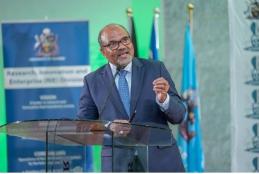
The Principal Secretary for Science, Research and Innovation urges universities to prove the impact of their research as the University of Nairobi opens Research Week 2026.
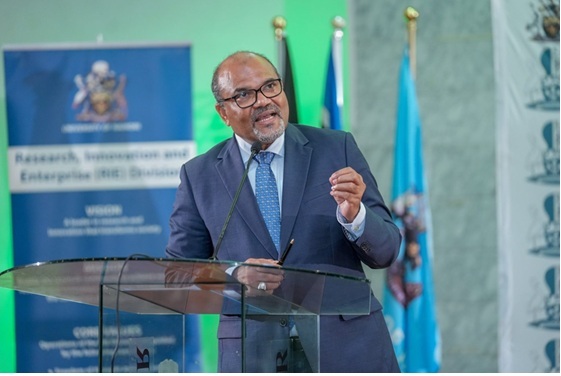
The Principal Secretary for Science, Research and Innovation urges universities to prove the impact of their research as the University of Nairobi opens Research Week 2026.

The highlight of the closing ceremony was a deeply passionate, future-oriented keynote address delivered by the Chief Guest, Dr. Tonny Omwansa, Chief Executive Officer of the Kenya National Innovation Agency (KeNIA). Having founded Nairobi Innovation Week in 2015 while serving as a faculty member at UoN, Dr. Omwansa returned to share a vision establishing the university's unique, disproportionate responsibility in shaping Kenya's economic future.
Nairobi Innovation Week 2026 officially kicks off today at the University’s Great Court. Besides exciting innovator exhibitions, a key highlight of the day is the Student Innovation Pitching Competition.
This day builds on yesterday’s Africa Forward: Youth and Innovation Day, held in partnership with the French Embassy in Nairobi.
Organised under the theme "Youth-Driven Solutions for a Sustainable Future," this year's edition brings together innovators, researchers, students, industry partners, government agencies, development organisations, and start-ups for a full day of activities including an Opening Ceremony; Keynote Addresses; Innovation and Thematic Exhibitions; Poster Presentations; Innovators’ Pitching Competition; Startup and Youth Engagements; Industry, Research and Innovation Partnership Forums; and One-On-One Career Advice for Students.
In a strategic consultation the Deputy Vice-Chancellor in charge of Research, Innovation, and Enterprise (RIE), Prof. Margaret Jesang Hutchinson, welcomed acclaimed Finnish biopharmaceutical nanotechnology expert Professor Marjo Yliperttula from the University of Helsinki to solidify a framework targeted at advanced biochemical research, intellectual property development, and enterprise.
The DVC described this move as a vital institutional evolution, emphasizing that while the University has a strong legacy in Science, Technology, Engineering, and Mathematics (STEM) disciplines, the social sciences should also be taken seriously because of their significance in promoting the sustainable transformation of communities. Social innovation in this context refers to innovation that is "social in both means and ends," where ideas are generated by the community and the proceeds are reinvested back into it.
This strategic document, supported by the United Kingdom’s Foreign, Commonwealth and Development Office (FCDO), provides a blueprint for a more structured and accountable research ecosystem. By officiating this launch, the Prime Cabinet Secretary signaled the government’s support for mainstreaming science into the public discourse.
Why this Masterplan Matters:
The event brought together over 5,000 stakeholders, including government leaders, global ambassadors, academia, the research community, industry giants, and members of the public. Our university’s participation underscored commitment to the "quadruple helix model," where academia, government, industry, and the community collaborate to turn research into jobs, products, and policies.
This week, the Kenyatta International Convention Centre (KICC) has transformed into a bustling hub of energy, ideas, and groundbreaking technology. The inaugural Science, Technology, Research, and Innovation for Society (STRI4Society) Week 2026 is in full swing, attracting thousands of researchers, policymakers, industry leaders, and young innovators from around the world.