
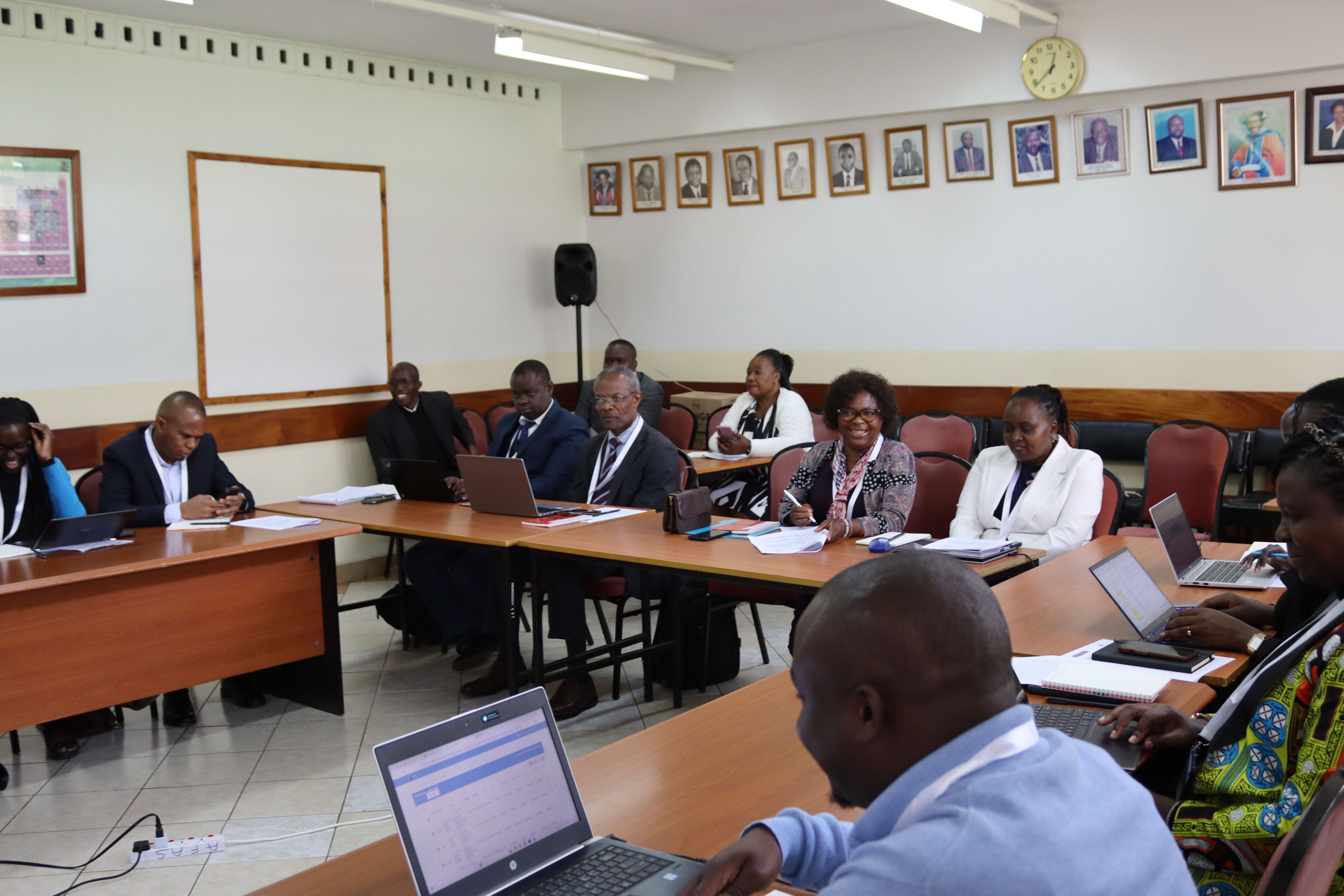
On March 3, 2026, the University of Nairobi (UoN) and the University of Manchester (UoM) convened the "Equitable Partnerships for African Research Infrastructure and Capacity (EP for AfRICa)" workshop at the Chiromo Campus. The two-day forward-looking activity, supported by the British Academy, is aimed at building robust and sustainable institutional systems for international academic collaborations.
In her remarks during the opening session of the workshop, Prof. Leonidah Kerubo, Acting Deputy Vice-Chancellor for Research, Innovation, and Enterprise (DVC-RIE), highlighted the workshop’s relevance in addressing the commitments in the University’s Research Policy and Strategic Plan towards “building a vibrant, well-coordinated, and globally competitive research ecosystem”.
The workshop comes at a time when the University is seeking not only to grow its research portfolio, currently standing at approximately 5 billion KES, but also elevate its global competitiveness as an academic and research hub. “For UoN, strengthening research management is central to achieving our goals of excellence, relevance, and societal impact, and to positioning the university as a continental leader in research governance”, said Prof. Kerubo.
A core theme of the workshop is the explicitly equity-oriented approach to research partnerships. As stated by the workshop conveners, this is a critical step towards a model of global research that values equity, shared leadership, and institutional strength. “Traditionally, international partnerships have faced power imbalances in funding flows, administrative responsibilities, and authorship”, the workshop concept states.
The participants, who include a faculty member and three senior professionals from the University of Manchester’s research support office, held candid discussions on these and other issues in a session dedicated to unpacking the meaning of “Equitable Partnerships”. The University of Nairobi was represented by research managers, grants managers, faculty administrators, researchers, principal investigators, and heads of research institutes. Based on their experiences and expectations, participants described equity using such terms as transparency, inclusion, recognition of contribution, and resource sharing aimed at answering two key questions: Who offers what? Who needs what? The EP for Africa initiative seeks to address the "asymmetries" by nurturing institutional capabilities alongside academic collaborations.
Tsegofatso Seabi, Research Facilitator in the Faculty of Humanities at the University of Manchester shared Prof. Kerubo’s perspective of an increasingly complex and competitive research funding landscape where strategic collaborations backed by the right infrastructure were essential ingredients for success. Ms Seabi expressed excitement about the collaboration with the University of Nairobi, noting that their team was eager to share experiences about the research infrastructure within the two partner institutions so as to inform future engagement.
Prof. Daniel Olago, Chair of the Department of Earth and Climate Sciences and Director of the Institute of Climate Change and Adaptation (ICCA) co-hosted the meeting. He welcomed the focus on management, noting that research management is often a hurdle that can lead to projectmchallenges. Participants will engage in mapping the entire research lifecycle from pre-award grant sourcing to post-award financial reporting and knowledge dissemination.