
rie1

The Principal Secretary for Science, Research and Innovation urges universities to prove the impact of their research as the University of Nairobi opens Research Week 2026.
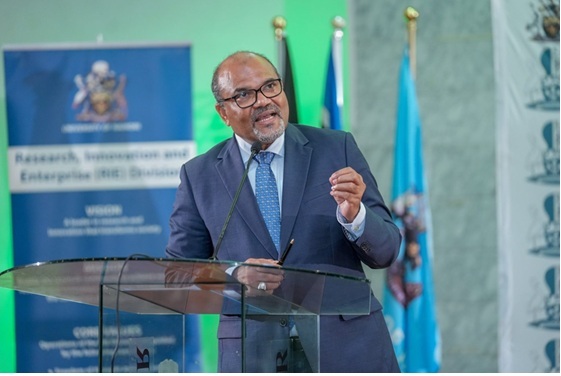
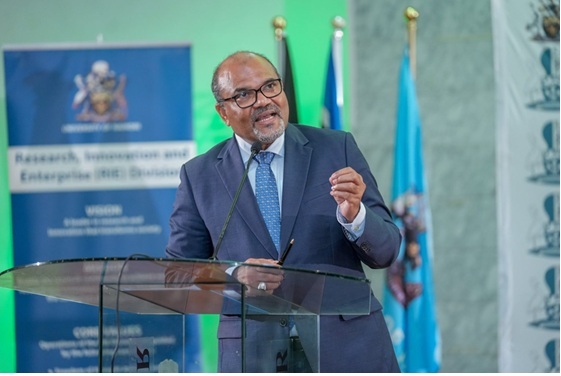
The Principal Secretary, State Department for Science, Research and Innovation, Prof. Shaukat Abdulrazak, addresses participants and officially opens Research Week 2026.
The University of Nairobi opened Research Week 2026 on Wednesday 21st October with a call to make research count for communities and the economy. Prof. Shaukat Abdulrazak, Principal Secretary, State Department for Science, Research and Innovation, officially opened the week at the Chandaria Auditorium, UoN Towers. It runs until Friday 23rd October under the theme Transforming Society through Research Excellence, Artificial Intelligence and Other Emerging Technologies in a Globally Competitive Environment.
Prof. Abdulrazak said universities must take their research beyond academia, break down silos and tackle national problems, from El Niño early warning to post-harvest losses and affordable housing. “How has that research impacted the community and the society?” he asked.
He noted the President’s commitment to raise research funding from 1 percent towards 2 percent of GDP, outlined national plans on research clusters, funding and artificial intelligence, and invited the University to work closely with his office.
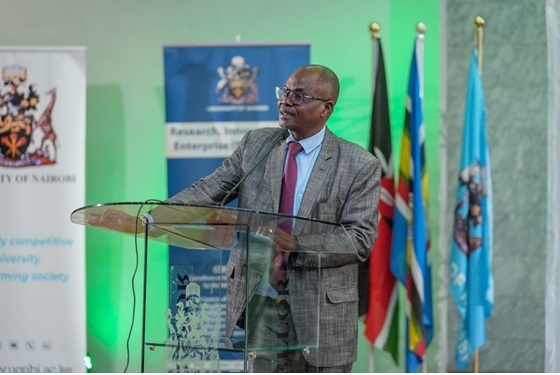
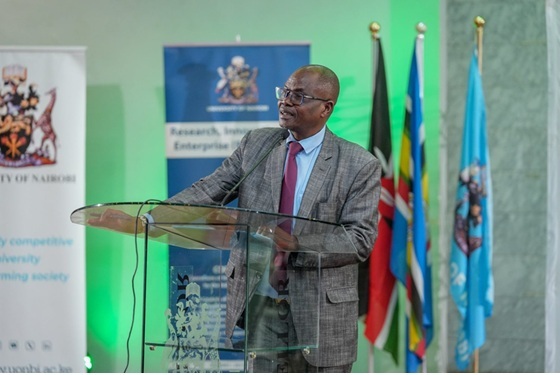
Vice-Chancellor Eng. Prof. Ayub Gitau making his remarks before inviting the Chief Guest at the official opening ceremony of the Research Week 2026 on 21st October 2026 at the UoN Main Campus.
Vice-Chancellor Eng. Prof. Ayub Gitau said research is what sets a university apart. He reported 19 new grants worth more than KSh 1 billion in the first quarter of this financial year, and the licensing of three University bean varieties for commercialisation. He thanked the Government of France for financing the Engineering and Science Complex, for which plans were underway for the groundbreaking.
Aligning the University’s priorities with the Kenya Research Financing and Capacity Strengthening Masterplan (2026-2036), he asked Government to equip and maintain shared laboratories, provide predictable financing that matches the grants researchers win, and strengthen technology transfer.
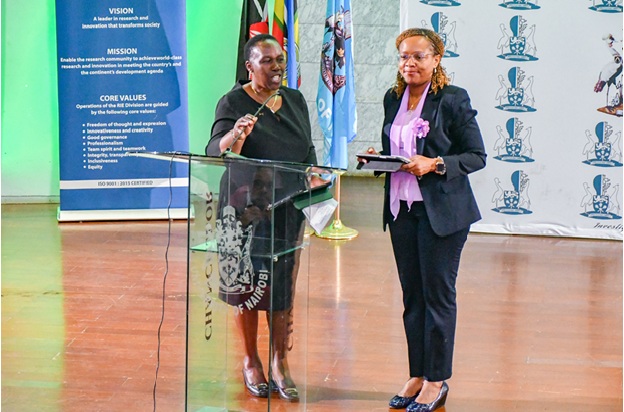
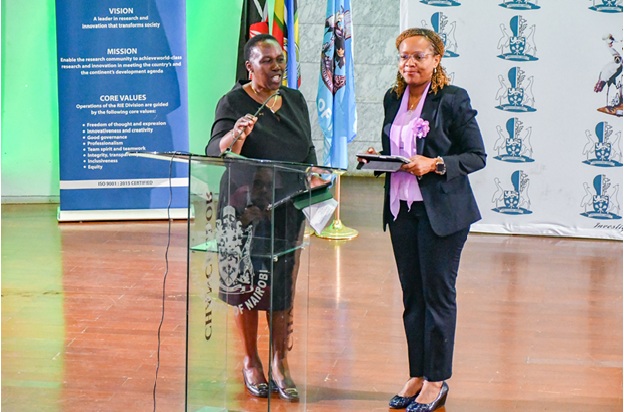
Deputy Vice-Chancellor, Research, Innovation and Enterprise, Prof. Margaret Jesang Hutchinson (left) with Director KAVI-Institute of Clinical Research, Prof. Marianne Mureithi, at the opening ceremony of the Research Week 2026.
Deputy Vice-Chancellor, Research, Innovation and Enterprise (RIE), Prof. Margaret Jesang Hutchinson, said the Division was committed to its mandate of building a culture of research and innovation as well as championing the University’s research agenda. “We are committed to carrying this agenda and keeping the university alive to transform society,” she said. She thanked the faculty teams and students who made the week possible.
Director of Research and Enterprise, Prof. Thomas Ochuku, noted that the summit was taking place at a time of rapid global transformation, marked by supply chain disruptions and the swift rise of artificial intelligence. He stressed that Research Week provides an essential interdisciplinary forum for scholars to proactively address these disruptions and develop impactful, research-backed solutions.
The opening ceremony brought together the Vice-Chancellor and all the Deputy Vice-Chancellors, Deans, directors of institutes and centres, researchers from the ten Faculties, and students. They were joined by representatives of the National Council for Science, Technology and Innovation (NACOSTI) and industry representatives from Nendo Research and Kenya Commercial Bank Group.

Students from CASELAP perform the satirical play Our Sea, Our Voice during the opening ceremony of Research Week 2026.
The CASELAP play Our Sea, Our Voice, introduced by Prof. Collins Odote of the Faculty of Law, showed how drama can carry research to the public. The satirical piece dramatised a three-year project with Danish partners on environmental maritime governance, including vessel pollution and the rights of coastal communities.
PhD candidate Gloria Katunge, from the Department of Physics, traced her path from undergraduate studies at UoN to international research fellowships. She urged fellow students to watch their institutional emails for global grants and fellowship opportunities.
Prof. Marianne Mureithi, Director of the KAVI Institute of Clinical Research, noted that Phase 1 and 2 Ebola vaccine trials were conducted at the University, and said researchers should prepare for problems before they arrive.

Participants applaud during the opening ceremony at the Chandaria Auditorium, UoN Towers.
More than twenty conferences and workshops, convened by all ten Faculties and the Mombasa and Kisumu Campuses, continue until Friday in physical, virtual and hybrid formats.
The full programme is at Home – University of Nairobi Research week. Join the conversation at #UoNResearchweek.