
The University of Nairobi, through the Research, Innovation, and Enterprise (RIE) Division, is finalising a new Research Policy framework that will solidify its position as a global centre for discovery. The policy will also ensure that the research function is in step with the University’s 2023–2027 Strategic Plan; higher education regulatory requirements; and national, regional, and continental development priorities.
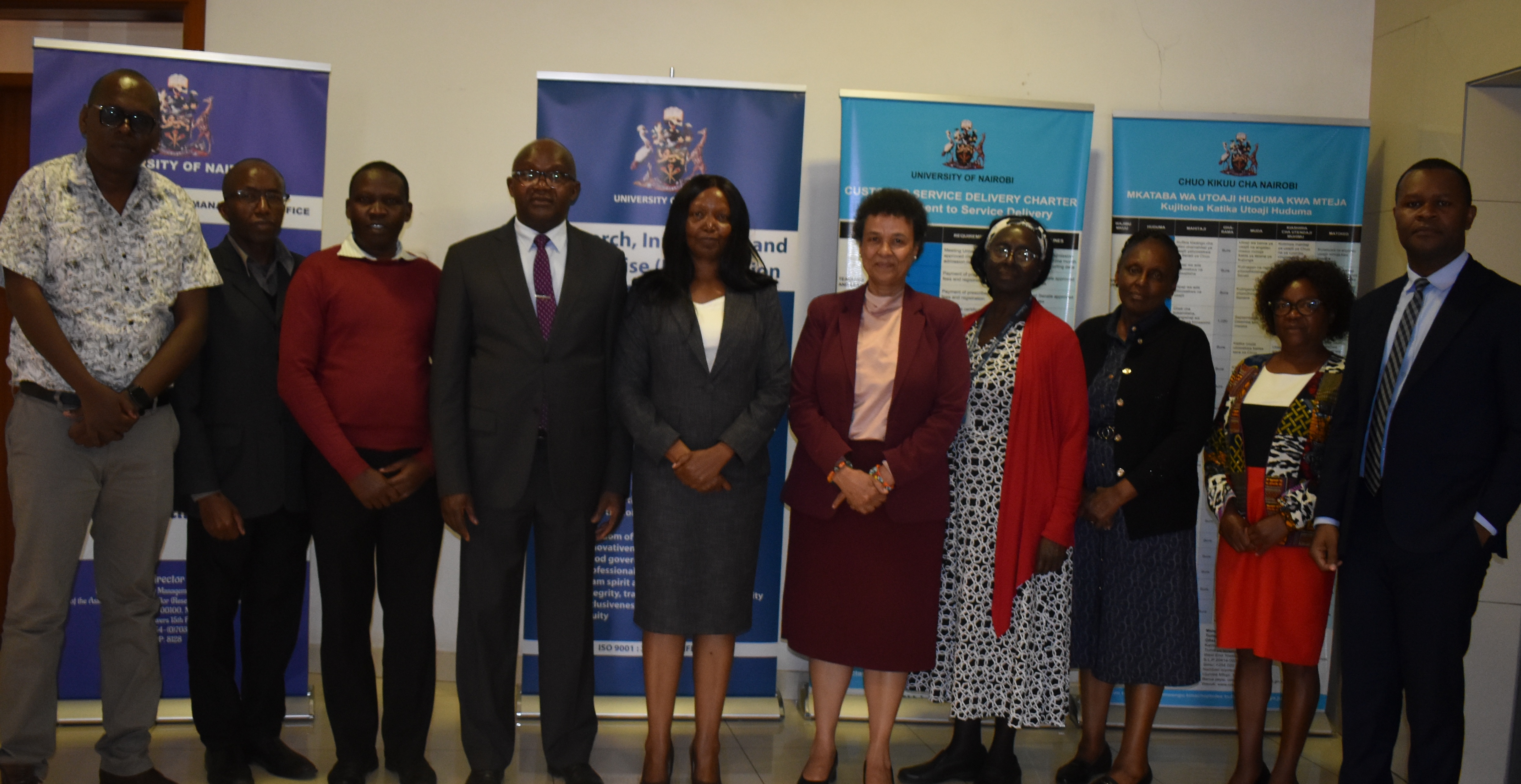
Through the new policy, the University will be seeking to replace the existing guidelines for institutional research, motivated by a vision that seeks to position research as a key pillar of transformation in a globally competitive environment. On 4 March 2026, the UoN Research Policy Review Committee presented a progress report to the Deputy Vice-Chancellor (RIE), Prof. Leonidah Kerubo at her University of Nairobi Towers office. In the meeting also attended by the Director for Research and Enterprise, Prof. Thomas Ochuku Mbuya, the committee chairperson Prof. Evelyn Wagaiyu, highlighted the main strategic inclusions to the draft policy. Prof. Wagaiyu is the Associate Dean of the Faculty of Health Sciences.
The proposed policy document caters for a central research support hub for grant writing, research branding, and administration of a dedicated University Research Fund, to ensure that researchers have the resources they need to thrive. To further strengthen research integrity, the policy outlines reviewing plans under an Institutional Review Board (IRB). This move aims to streamline ethical approvals and licensing, particularly for human and animal research subjects. This will ensure compliance of our processes with international best practices and national research regulatory requirements.
The policy also proposes infrastructure sharing guidelines that would allow effective sharing of the university’s state-of-the art laboratory resources across all faculties. Another priority is the "teaching-research-innovation nexus," which seeks to identify and protect intellectual property early in the research cycle. Through harmonising the new research policy with the Intellectual Property Policy currently under review, Prof. Kerubo said that the RIE Division is keen on establishing a clear pathway for commercialisation and incubation to help both staff and students transition their findings from the lab to the market.
The committee is expected to complete the already extensive stakeholder consultations by seeking the views of the directors of research institutes in the University. This collaborative process will ensure that the final policy is a robust, functional engine for research sustainability.