
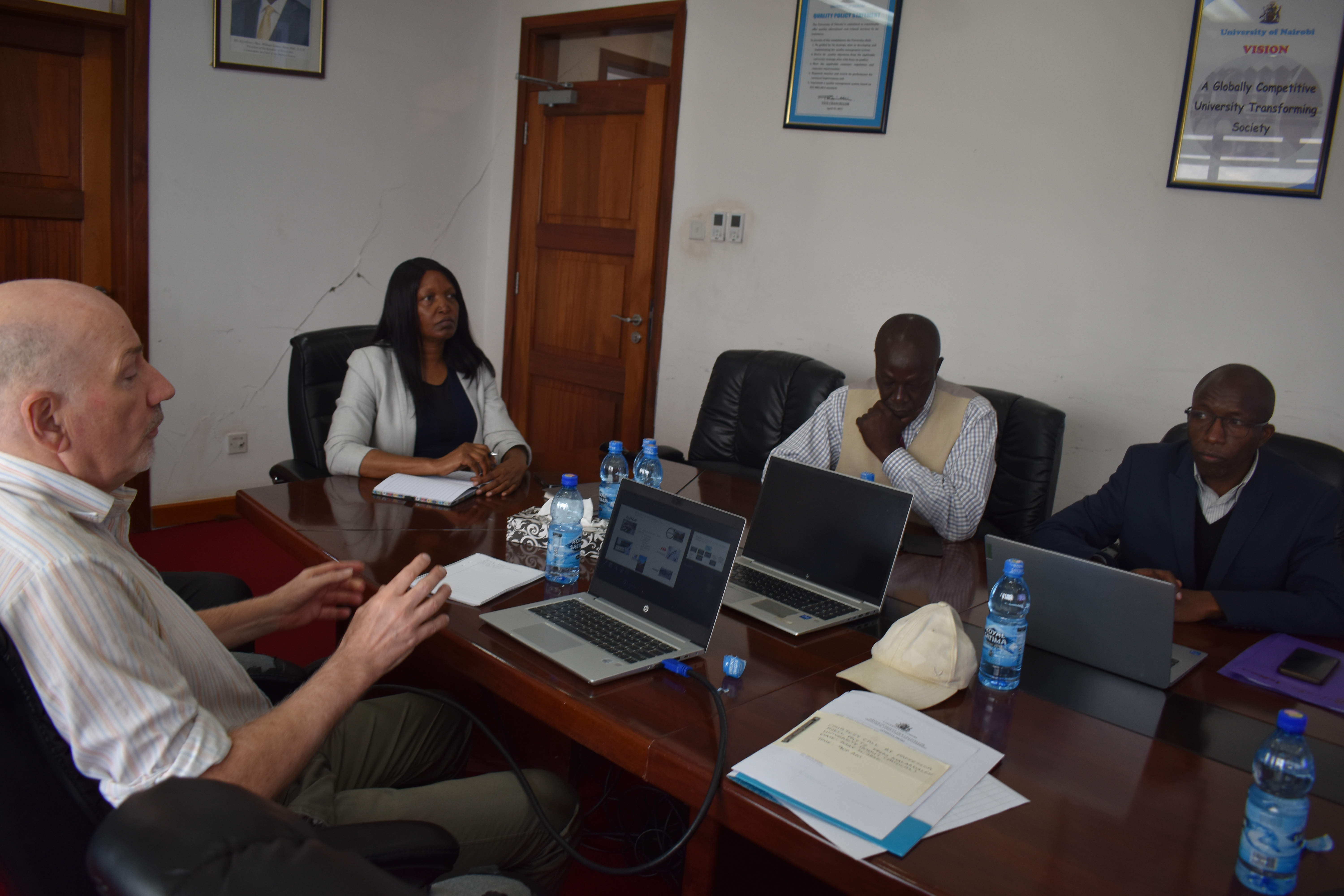
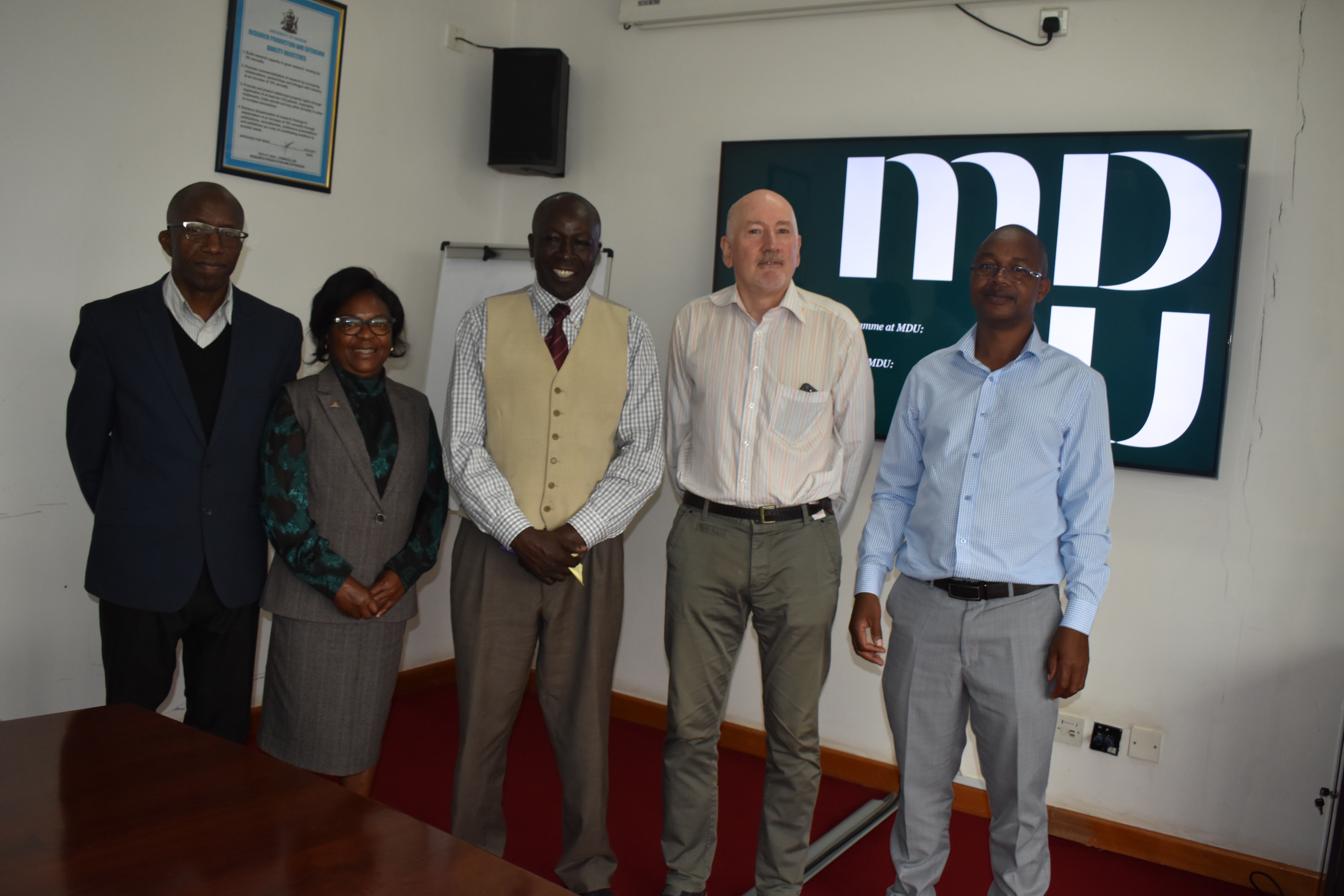
The University of Nairobi (UoN) continues to sustain the momentum in its quest for global competitiveness in academia and research. On 4 May 2026, the Research, Innovation and Enterprise (RIE) Division held discussions with Prof. Kjell Prytz , a representative from Sweden’s Mälardalen University (MDU), to identify opportunities for collaboration. Prof. Prytz highlighted that the development trajectory of MDU is closely linked to its strategic location in a highly developed industrial city in Sweden. This attribute offers unique lessons for UoN, one of whose goals is to cultivate strong academia-industry linkages.
Unlike traditional academic settings, MDU’s identity is defined by its intense collaboration with world-class local industries such as ABB, Hitachi, and Volvo leading to unparalleled access to a robust research and innovation ecosystem while providing a model for training students for future-ready roles. The institution is widely recognised as Sweden’s leading "collaboration university," having some of the strongest ties to the private sector and industry of any school in the country.
For UoN, which currently seeks to strengthen its own innovation and commercialisation sectors, forging a partnership with MDU presents a critical opportunity to learn from MDU’s success in areas like industrial PhD programmes, where students are directly employed by the private sector while conducting research.
MDU’s research in Intelligent Embedded Systems and Robotics is internationally ranked among the best in the world. Sustainable energy systems; environmental engineering; health, including health technology research; and business and finance are also leading research areas in MDU’s programmes. The discussions further explored research in "agrivoltaics", using vertical solar panels to preserve farming land, a project with immense potential for Kenya’s agricultural landscape. Inovative research in medical physics, such as using robotic arms for affordable breast cancer therapy, highlights the potential for societal transformation.
Prof. Leonidah Kerubo, Acting Deputy Vice-Chancellor (RIE) highlighted that MDU offers "very interesting masters programmes" in fields like robotics and cybersecurity, which would provide the high-level experience UoN students need to compete globally. A partnership with UoN would also enhance access to the Erasmus+ project, to facilitate staff and student exchanges, allowing UoN students and scholars to access state-of-the-art facilities and change their perspectives through international exposure.
The DVC shared that students who participate in such exchanges often undergo a life-changing transformation, returning as some of the "best students" because they have accessed state-of-the-art industrial facilities. The meeting was also attended by Prof. Francis Nyongesa, Acting Dean of the Faculty of Science and Technology and representatives from the Department of Physics led by the Head of Department, Dr Zephania Birech.
Overall, the discussions identified opportunities for bridging the gap between Kenyan academic talent and Swedish industrial expertise, in a collaboration that would transform UoN into a vibrant centre for technological innovation and societal impact.