
On 14 March 2026, the University of Nairobi (UoN) made a major step toward national food security as Prof. Leonida Kerubo, Deputy Vice Chancellor for Research, Innovation and Enterprise (DVC-RIE), officially handed over high-value breeder seeds to the Agricultural Development Corporation (ADC) at the Lanet Station in Nakuru. This mission signals the transition of years of lab research into large-scale commercial production, aimed at providing Kenyan farmers with much-needed certified bean seeds.
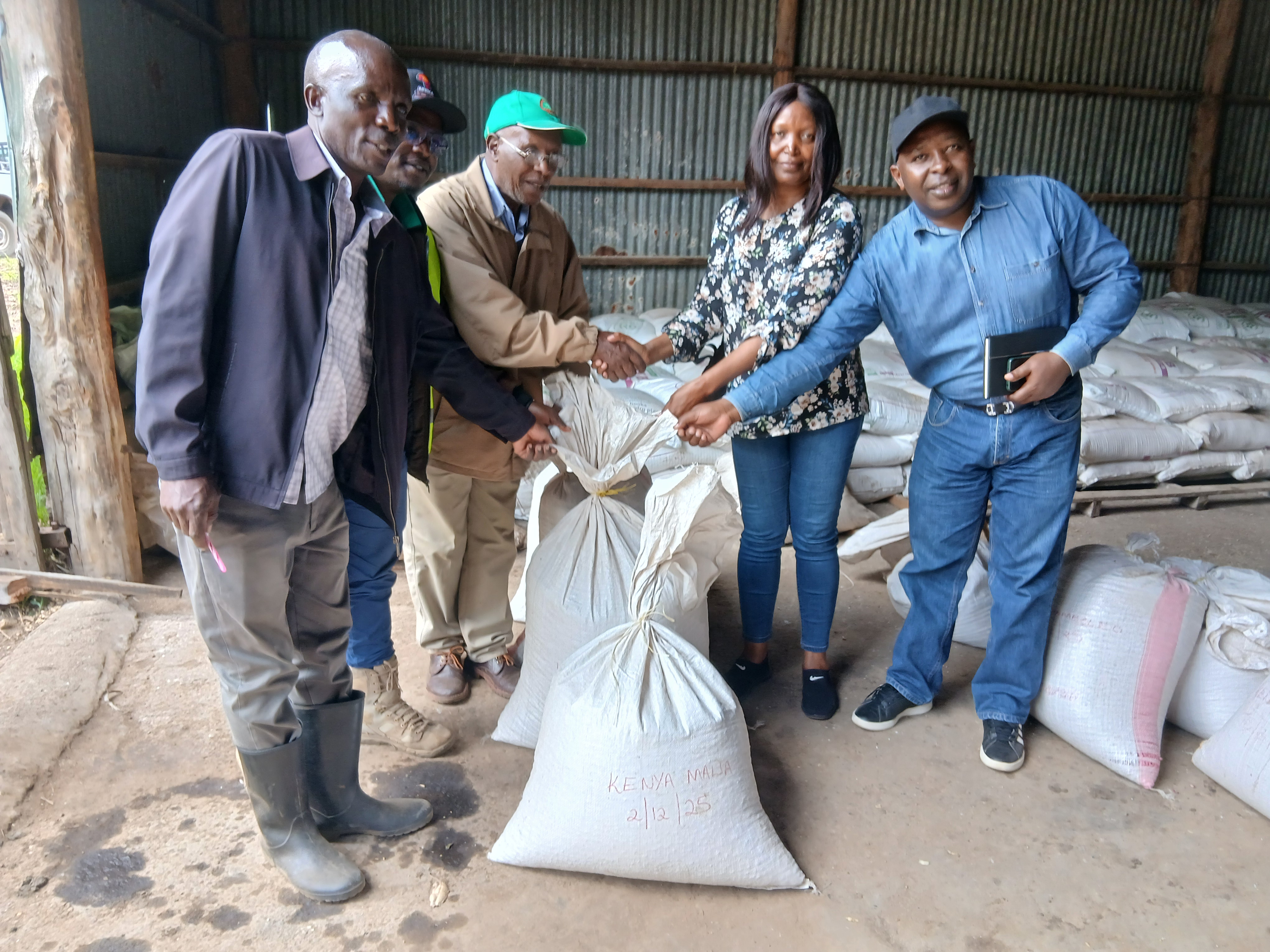
Acting Deputy Vice-Chancellor, Research, Innovation and Enterprise, Prof. Leonidah Kerubo (second right), at the Agricultural Development Corporation (ADC) station in Nakuru to hand over breeder seeds for multiplication. She was accompanied by Director of Intellectual Property Management, Prof, Maina Wagacha (Right) and bean breeder, Prof. Paul Kimani (centre)
This collaboration, formalised in 2024, addresses a critical stagnation in the agricultural sector. While global bean yields can reach 2 tons per hectare, Kenya remains at 500 kg per hectare, lagging behind her neighbours with harvests of 1.1 to 1.8 tons. Local production of certified seeds is below 25 percent of the demand, leaving the country to rely on imports.
By commercialising eight elite varieties from the University’s portfolio of 22 registered bean types, UoN and ADC are working to close the gaps and boost local productivity. The seeds handed over at Lanet represent a new generation of quality beans designed for high performance and nutrition:
- Triple Yield Potential: Climbing bean varieties offer yields three times higher than traditional bush varieties.
- Climate & Disease Resilience: These varieties are drought-tolerant and resistant to major diseases like rust and angular leaf spot.
- Bio-fortified Nutrition: Rich in iron and zinc, these beans are associated with greater health-enhancing properties and fast-cooking qualities compared to the ordinary varieties available to farmers.
- Soil Health: The crops are excellent nitrogen fixers, improving soil fertility conditions forfuture crop seasons.
The breeder seeds planted at the ADC Lanet station in late 2025 have received a clean bill of
health and are registered by the Kenya Plant Health Inspectorate Service (KEPHIS). Following
the official handover by the DVC-RIE, ADC will proceed with basic seed multiplication. This
action will move the innovations developed at the University of Nairobi beyond the research and
demonstration plots to the hands of farmers across Kenya.